Record #170: Fleetwood Mac – Fleetwood Mac, or, The White Album (1975)

It’s so strange to think that by the time the Lindsey Buckingham/Stevie Nicks era of Fleetwood Mac began, the group had already recorded nine albums. Fleetwood Mac had always been a sort of amorphous collective that placed little importance on the lead singer in question, which isn’t surprising, considering the group’s very name was derived from the members of the rhythm section.

But here, with the addition of Buckingham and Nicks, the power of the frontmen begin to match the chops of the musicians that had always played masterfully behind (or despite) them. Continue reading

Record #169: Fleet Foxes – Helplessness Blues (2011)

The question to any perfect debut is “Where can we go from here?”

Their self-titled full-length was as close to flawless as a record could get—it’s golden harmonies and Seattle-bluegrass instrumentation combined to form a record that was truly timeless, sounding traditional and contemporary at once.

And so when they returned to the studio to record what would undoubtedly be one of the most anticipated records of the year, they decided (wisely) to expand rather than progress. Continue reading

Record #168: Fleet Foxes – Fleet Foxes (2008)

I remember the first time I ever heard White Winter Hymnal. Someone had posted the creeping, stop motion video online, and I was spellbound. I gobbled up everything of Fleet Foxes I could–the record, radio performances, their Judee Still cover on Black Cab Sessions, everything. When I returned to college that fall, I spread White Winter Hymnal like gospel (along with Bon Iver, who broke through that same summer). Their mix of Beach Boy harmonies and mountain folk filtered through Seattle sensibilities was at once fresh and familiar. Just how familiar was revealed to me when my roommate responded to the album with “that was Fleet Foxes? I thought you were listening to James Taylor.”

Continue reading

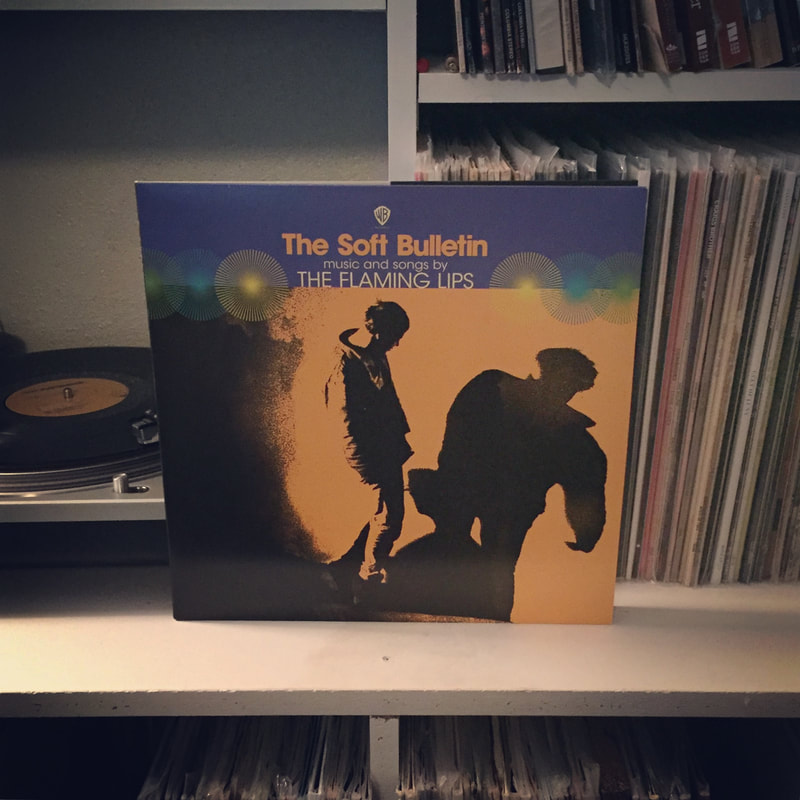
Record #164: The Flaming Lips – The Soft Bulletin (1999)

Too often, The Soft Bulletin’s significance is attributed to the creative leap forward it was for the Flaming Lips. It marked the moment the acid-dropping punks decided to get serious and make some seriously beautiful pop music.

And while that’s true, it discounts the strength the album holds on its own…

Personally, the first Lips record I ever heard was 2009’s Embryonic, which played more like the psychedelic soundtrack to a 1950’s sci-fi horror movie than anything the Flaming Lips would have turned out.

And that, along with “Do You Realize,” “She Don’t Use Jelly,” and the Postal Service’s cover of “Suddenly Everything has Changed” were my context for hearing this record.

And I instantly loved it.

The urgent, overdriven drums, the synth strings, the sprinkling harp, the extended instrumental passages, and Wayne Coyne’s shaking, wild-eyed voice that ties everything together. It’s an album of unveiled optimism, young love, friendship, and occasionally drugs (this is the Flaming Lips, isn’t it?) that begs the listener to live and be alive, even in the face of hopelessness.

And fourteen years later, there hasn’t been much to rival moments like the opening strains of “The Race for the Prize” or the instrumental groove in “The Spark that Bled” or the closing crescendo of “Feeling Yourself Disintegrate.” It’s an absolute classic, regardless of its context in the Flaming Lips’ or anyone else’s discography.