Record #328: The Evens – Get Evens (2006)

Fugazi was always sort of like the Beatles of the punk scene, so it makes sense that Ian MacKaye’s band with his wife Amy Farina would seem a little bit like Paul McCartney’s early solo work. 
The Evens is far more cynical, of course, but there’s something about the ragged, mathy, husband/wife vocals that evokes Ram.

The entire instrumentation of the record begins and ends with the two voices, Ian’s Baritone guitar, and Amy’s drums. No overdubs, no distortion, no bass. Any fans of Fugazi’s final record The Argument will find no surprises here. The quieter songs on that disc form the basis of Ian’s guitarwork, while Amy’s drumming is filled with angular shuffles.

The lyrical content is vintage MacKaye–anticapitalist, anticonsumerism, antigovernment–but he’s never been more charming then here, particularly on “Dinner With the President,” wherein he asks why he’s never been invited over “(I live in town,” he says. “It’s not geography”) only to reveal the reason in the third verse (“I know just what I’d do…stand up and yell as the meal is served”).

While there’s nothing here that approaches the sheer heft of Fugazi’s monolithic catalogue, it would be a mistake to dismiss the Evens. Ian is just as sharp and witty as ever, and Amy is as formidable a writing partner as anyone else.

Record #327: BRAIDS – Deep in the Iris (2015)

Montreal art-pop group BRAIDS hasn’t really gotten their dues. Their hype ran high with their debut Native Speaker, traipsed joyfully between manic, loop heavy indie pop and almost post-rock ballads.

Its follow up, Flourish//Perish, released fresh on the departure of their keyboardist, was a far more subdued affair, dwelling mostly in ambient electronica. It was beautiful, but not as pixie-devilish as anticipations demanded.

And so their third record, Deep in the Iris was released to almost no fanfare. As a BRAIDS fan, I only stumbled upon it by accident (and ignored it for a few months). Which is a shame, because with a hype machine behind it, this record could have been a huge hit.

Rather than retreading either prior albums, BRAIDS finds a way to mix the soft atmospherics of Flourish//Perish with Native Speaker’s unhinged energy.

For example, listen to the third track “Blondie,” whose structure is built on a wash of swelling keyboard chords paired with starting and stopping breakbeats. Anti-slutshaming anthem “Miniskirt” starts as a low piano led ballad before the drums and synths turn it into a dance track.

​Given that they’ve always done both sides of their sound well, it’s good to see them here expertly combining them to create some truly engaging songs.

Record #326: Coldplay – A Rush of Blood to the Head (2002)

Think back to the early 2000s.

9-11 is fresh in our minds, the Strokes, Hives, and White Stripes have harbinged the Rock Revival, nu-metal’s studded leather boot is still kicking down our doors. Radiohead has released two electronic albums in a row.

40-Year Old Virgin hadn’t been released yet, so we were all ignorant to the fact that a certain band would make us gay apparently.

Into this cynical, hardened society, Coldplay released their second full length, A Rush of Blood to the Head

While Parachutes had made a bit of a mark thanks to a couple strong singles, Rush of Blood was ubiquitous (how many movies used “Clocks” in the trailer?), eagerly taking Radiohead’s place as U2’s heir apparent (the band photo on the inner sleeve even looks like it was taken from the Joshua Tree artwork).

Which was fine, because two things have always been true: 1.) Radiohead has always been too paranoid and suspicious of the ruling class to be the biggest band in the world, and 2.) Chris Martin “would give [his] left testicle to write an album as beautiful as OK Computer.” His words, not mine.

And A Rush of Blood to the Head is the closest Coldplay has ever gotten to that goal. That claim is going to piss off some people, most of whom haven’t listened to OK Computer recently enough to remember that its musical center is closer to “Let Down” than “Paranoid Android” (which actually sounds a little bit out of place). Rush of Blood, on the other hand, is a bit toothier than its reputation.

Wide-eyed in worldview and complacent in its composition though it may be, its not all “Scientist” and “Clocks” here. “Politik” is crunchy and wincing. Behind “Daylight’s” Arabic tinged strings is the most driving drum part Coldplay ever put to tape. “God Put a Smile on Your Face” throws its weight around by means of a ragged acoustic guitar.

“Green Eyes” and “Warning Sign,” with their perfect Mazzy Star vibes, would have been indelible 90s alternative hits had they been released eight years earlier. Whisper positively rips, remaining the loudest song the group has ever done. And “Clocks” and “Scientist”? They’re not bad tracks if you can isolate yourself from their overuse.

While Coldplay would go on to become parodies of themselves (I feel like I’ve said that before), here they are still making their mark on pop music, and who cares if that mark fits a bit snugly between a few other bands’ imprints? It’s a damn enjoyable record

Record #325: Flying Saucer Attack – Further (1995)

Cryptograms has always been my favorite Deerhunter record–especially the first side, with its swirling ambience occasionally giving way to a more straightforward pop song. Curious then, that I did not immediately flock to Further when I first saw it name dropped in Pitchfork’s review the way I did to Echo and the Bunnymen (though that was probably for Microcastle…).
But the comparison is more than appropriate. Further might lack the full band clarity that Cryptograms falls into, but its whooshing, somnambulant atmosphere is cut from the same cloth, if not the cloth itself (after all, it was released thirteen years earlier).

​Acoustic guitars are woven through massive towers of delay and reverb, obscuring the vocals in the mix to the point where they are occasionally more of an additional texture than a verbal element. It is absent of percussion, except for “To the Shore,” the twelve minute standout of the album, which utilizes a galloping tom loop and arhythmic cymbal rush alongside a wash of single-chord guitar delay and feedback.

Though now twenty years old, Further is timeless, at once nostalgic and futuristic. Next to album and label information, the spine reads the phrase “HOME TAPING IS REINVENTING MUSIC,” which may not seem like a huge deal now, with Garageband preloaded onto every Macbook, ten years after Arcade Fire’s Funeral and Clap Your Hands Say Yeah’s debut broke open the floodgates of self distribution on the internet, giving rise to the advent of free distribution services like Bandcamp.

But in the nineties, where bands like Nirvana, Radiohead, and even underground heroes Sonic Youth and Jawbox were relying on major labels to finance and distribute their music, a loud call for DIY ethics was a radical slogan as punk rock as anything Fugazi had to say on the subject, even if the music is about as un-punk as you can get.

Record #324: Deerhunter – Fading Frontier (2015)

While Deerhunter have never been a group to repeat their past, their catalogue has maintained a certain progression. From the swirling shoegaze of Cryptograms to the ragged garage punk of Monomania, the group has shed reverb and haze each release, bringing them more and more into the light. 
On the other hand, Fading Frontier might not sound much like previous releases, but it’s the first to break the progression towards less effect-heavy, straightforwardness. One might argue that Fading Frontier is Deerhunter’s dreamiest release, rife with synth textures and heavy bass grooves.

The Locket Pundt-led “Ad Astra” is a strong foray into new wave balladry (that coda though!). “Breakers” is the most crystalline piece they’ve ever done, with a breezy chorus that’s the best candidate for being used in an Apple commercial they’ve ever done. “Snakeskin” alone retains Monomania’s scuzzy funk, crashing with their first noise collage since Microcastle (“Ad Astra” has one too), an album whose weirdness makes several small returns throughout the running time.

It’s tempting to call Fading Frontier their most accessible album. It’s sleeker than anything they’ve done before (and about ten minutes shorter), and while they still get weird, they’ve learned to harness the beast of their weirdness and bend it to their will. But to call it accessible runs the risk of calling it more middle of the road, which certainly isn’t true. Maybe the middle of their own road, but who really knows where that road leads.

Record #323: Deafheaven – New Bermuda (2015)

When I first listened to this album, I dismissed it. In the face of Sunbather’s stunning rainbow of shoegaze, post rock, and black metal, New Bermuda seemed monochromatic. They seemed to be responding to purists’ claims that they were neither black or metal enough and doubled down on their metal chops. 

There are more palm muted chunks, more blast beats, more big riffs, and fewer passages of soaring brilliance. Seeing that their masterful blending of metallic and melodic elements is what attracted me to Deafheaven in the first place (and back to metal and hard music as a whole), it made little sense to me to dwell on this album. After all, there’s still Roads to Judah if I need a break from Sunbather.

But on a whim, I decided to listen to it again, and I noticed a far richer story…

All of the colors were still here–they were just shifted a shade darker. The furious black metal boil that stewed the songs on Sunbather is harder and rawer. Tracks like “Vertigo” and “Pecan Tree” seemed aggressive compared to the rest of Sunbather, but their brashness functions as New Bermuda’s starting point.

But as the record progresses, they turn down the distortion and borrow colors from alternative and post-punk. “Baby Blue” opens with a Smashing Pumpkins-esque, clean guitar arpeggio section before exploding into heaviness (now with a lead guitar line that would make Kirk Hammett green).

“Come Home” explores death metal, complete with chugging palm mutes and lower register growls, somehow managing to seam it together with their trademark metalgaze before closing with a beautiful slide guitar solo. The opening verses of “Give to Earth” almost reaches Joy Division territory with a clean, downstroked rhythm guitar and a cut time drum beat (George Clarke is screaming over this, mind you) before it explodes into wall-of-noise guitars (this IS Deafheaven after all).

All in all, despite it’s shift of scale, New Bermuda ends up feeling the same as Sunbather, even if it doesn’t always sound like it it. While it may not be as life affirming, it’s just crushingly beautiful.

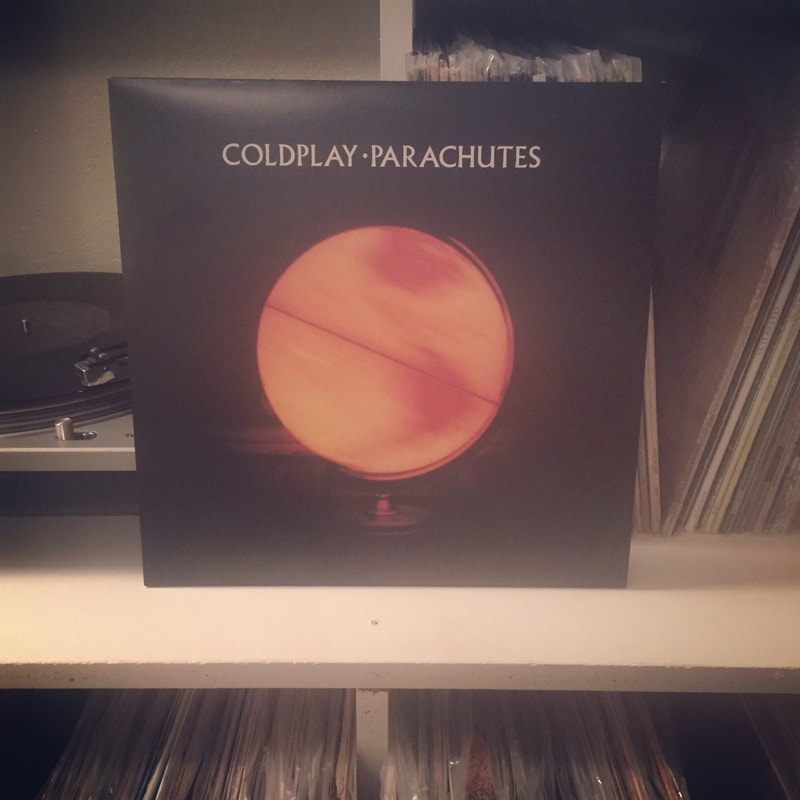
Record #322: Coldplay – Parachutes (2000)

Coldplay has been accused of being many things: lame, boring, unoriginal—and much of that is true. Over the years, they have become a bloated self parody, pausing occasionally to dabble in top 40 pop (which makes sense, considering their place in pop culture).

But on their debut Parachutes, there’s no success to go to their heads, no past catalogue to lazily copy, no misguided attempts to reinvent themselves.

Parachutes is a simple record—pleasant enough, middle-of-the-road guitar pop that immediately betrays their fondness for OK Computer. There’s little exploratory ambition here: most of the sonics had already been mined by Blur, Oasis, and Radiohead.

But none of that makes Parachutes a bad record. It’s actually pretty dang good. When the opening tracks first blossoms into chiming, single note lead guitar and a refrain of “we live in a beautiful world,” it’s almost thrilling.

Much of this success can be owed to the group’s ability to reappropriate tried-and-true pop/rock tropes into something fresh. Chris Martin’s lyrics may not be the best penned, but his sky-high, delicate delivery more than makes up for it. Johnny Buckland might never rip through an incredible solo, but his minimalistic lead guitar style is flawless (see: the slide guitar in “Trouble”).

​And unlike most Coldplay records, there isn’t an out of place track on here. Rather, we have a gentle, beautiful record that serves as an excellent introduction to one of the most lauded bands of their time.

Record #321: Can – Ege Bamyasi (1972)

ege bamyasi

The last time I wrote about Can, I worried if the internet could handle anymore of its finite data being used to write about the legendary Krautrock pioneers.
Because friends, there have been terrabytes written on their importance and influence.
​The lion’s share of that code is occupied with musings on this album.
Ege Bamyasi is, with no room for debate, Can’s most long-reaching record. It found the group tightening their free-form, chaotic noodling into slicker, more sophisticated arrangements. While they would perfect this approach on their next album, Future Days (my personal favorite), Ege Bamyasi is absolutely unparalleled in its cultural importance. It’s been covered by Stephen Malkmus and Beck, sampled by Kanye West, and offered Spoon their band name. And it’s not for no reason: the songs contained on this disc are incredible. Pinch creeps darkly across a hardbop shuffle. Sing Swan Song is as morose and soothing a ballad the group ever wrote. One More Night writes Stereolab a love letter twenty years in advance. Vitamin C shivers with manic energy. Soup rocks and rolls heavier with a tempo that accelerates until it crashes into whooshing and whirling tape effects and formless improvisation. I’m So Green is as far from that as you can get–a simple, short, happy pop song (remember: Beck covered it). Spoon is a nocturnal, half-asleep chant set to a slow samba. Every minute of this record is brilliant, and it is deserving of its crown as King of the Krautrock Albums.

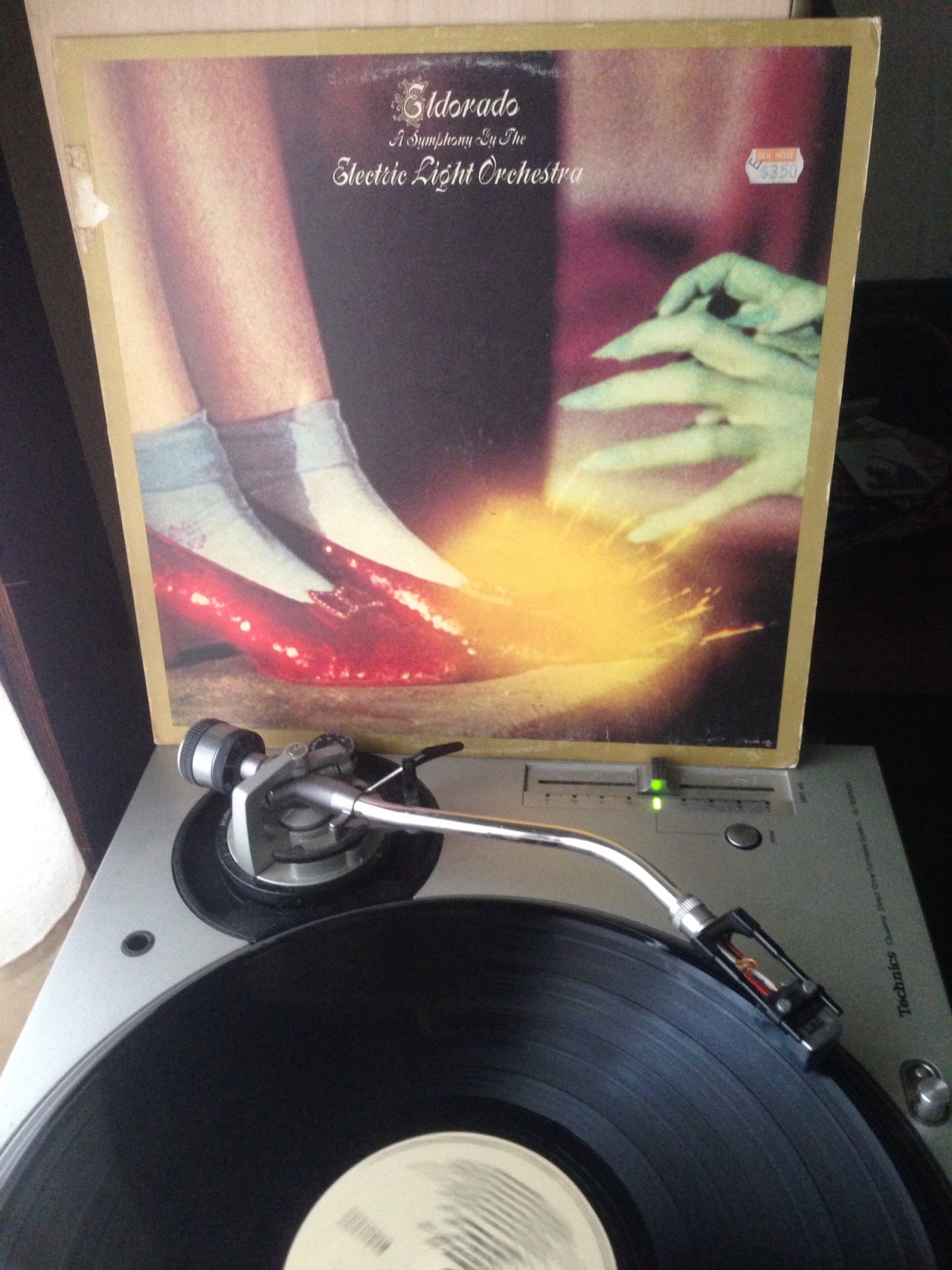
Record #320: Electric Light Orchestra – Eldorado (1974)

Record #320: Electric Light Orchestra - Eldorado (1974)
The way the legend is told, it took Jeff Lynne some time to properly align his project with his imagination. It wasn’t until this, his fourth album, that the Electric Light Orchestra actually...

The way the legend is told, it took Jeff Lynne some time to properly align his project with his imagination. It wasn’t until this, his fourth album, that the Electric Light Orchestra actually used an orchestra in its recording. The result is ELO’s first great record. While Lynne’s songcraft and pop mastery have always been apparent, the addition of an orchestra brought the lushness that would make ELO legendary.


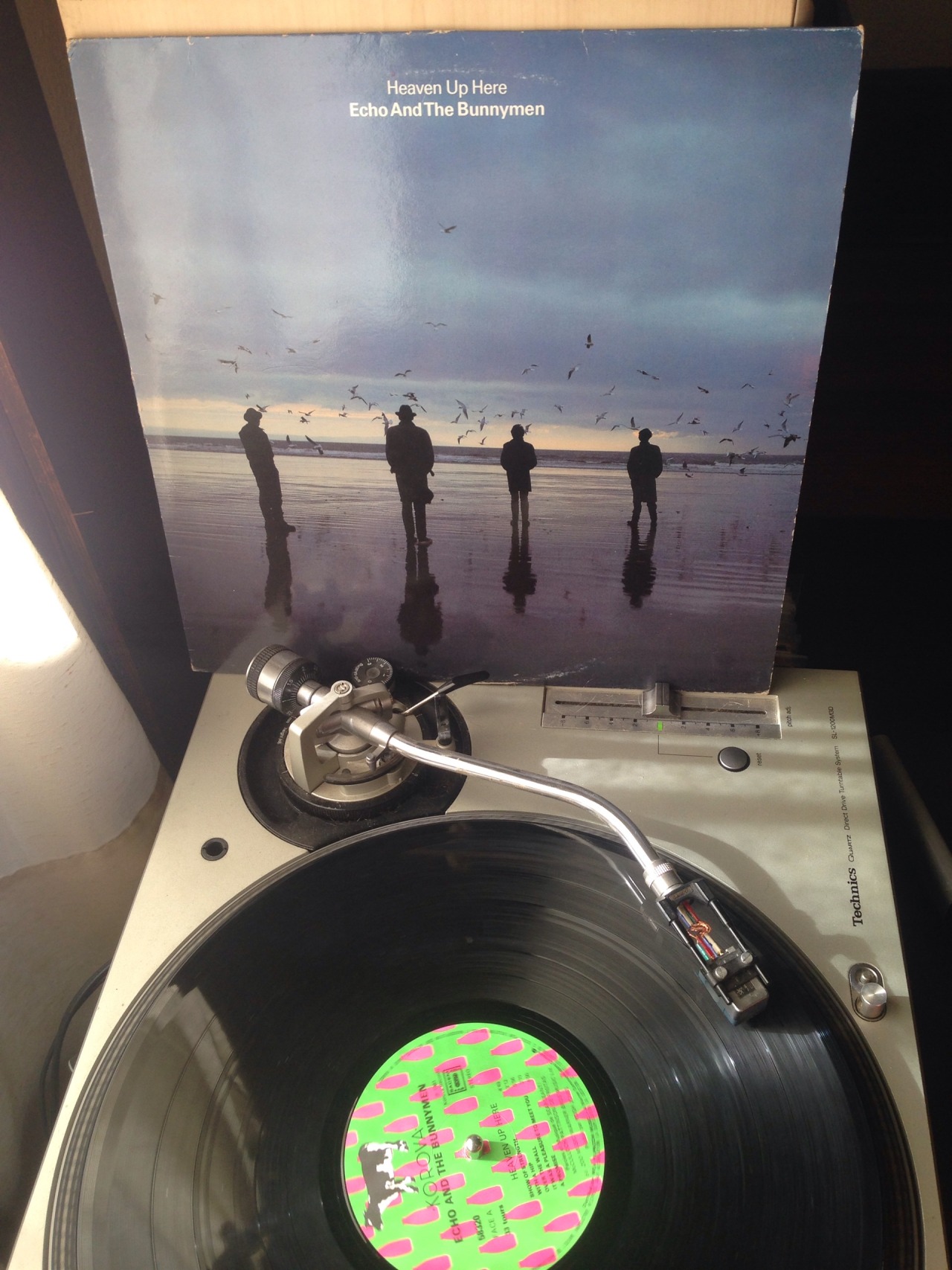
Record #319: Echo & The Bunnymen – Heaven Up Here (1981)

Record #319: Echo & The Bunnymen - Heaven Up Here (1981)
The early 80s were famous for great post-punk lead singer/guitarist duos. Bono & The Edge, Morissey & Johnny Marr, Ian McColluch & Will Sargeant…wait, what do you mean you’ve never heard of Ian...


The early 80s were famous for great post-punk lead singer/guitarist duos. Bono & The Edge, Morissey & Johnny Marr, Ian McColluch & Will Sargeant…wait, what do you mean you’ve never heard of Ian & Will?

That, my friend, is a tragedy, and I’m sorry that society has largely ignored Echo & The Bunnymen, who remain one of the most under-heard bands of all time.

Continue reading