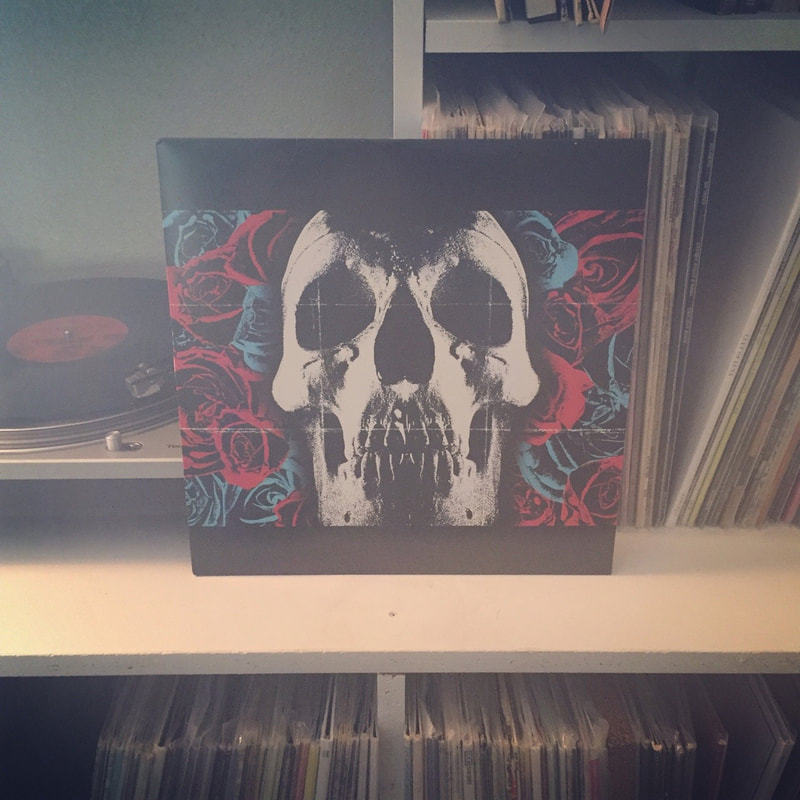
Record #390 – Deftones – Deftones (2003)

I’ve never shied away from admitting that my musical expertise has some blind spots. Recently, I realized that one of those blind spots was the Deftones
And for no discernible reason. I’ve known their name forever. Tons of bands I love have toured with them or cite them as an influence. I absolutely love Palms, Chino Moreno’s side project with former members of post-metal giants ISIS. I’ve even heard certain Deftones tracks and loved them (Change in the House of Flies, most notably). I listened to most of Gore upon its release to check it out, and mostly liked it.
So why had I never gotten into the Deftones?
Last week, I decided to get to the bottom of this. I opened a note on my phone and listened through the entire Deftones discography (well…White Pony on) taking notes on each individual track. And I discovered something.
I really, really like Deftones.
Sure, every once in a while they get into some numetal riffage nonsense that I don’t care for, but most of that is forgivable considering the huge soaring melodies and beautiful textures they employ so liberally.
This album wouldn’t necessarily be my choice for first purchase (probably GoreSaturday Night Wrist, or Koi no Yokan), but I found an eBay auction with no bids and a half hour to go, so here we are.
And it’s not like I care that much—this album is killer. Deftones have always been more sophisticated than the numetal groups they often get lumped in with, and this album sees them drawing from a number of decidedly non-metal influences (and all the rap rock is gone, thank God).
The opener “Hexagon” is a brilliant marriage of big shoegaze guitars and metal screams (think Deafheaven in utero). “Minerva” is an absolutely beautiful tune that somehow became a radio hit. “Deathblow” is creeping study in their mastery of soft/loud dynamics. “Lucky You” even brings some trip-hop to the table.

But that’s not to say there’s nothing dated on here. Even “Hexagram” has a weird numetal breakdown in the choruses. Some tracks (”When Girls Telephone Boys,” “Bloody Cape”) skew more aggressive, almost devoid of their harmonic brilliance that drew me to them in the first place. But the good far outweighs the bad here. White Pony often gets cited as the group’s first great record, but Deftones is where they really shed the numetal nonsense of their peers and became the iconic masters of melodic alt-metal that they are today.

Record #389: Johnny Cash – Greatest Hits, Volume 3 (1978)

What is the measure of a great artist? Is it the enduring power of their songs? Check. Is it their notoriety? Check. Is it the size of their catalog? Big ol’ check…
Or is it the number of songs you can recognize on an album labeled “Greatest Hits?” In this case, one.
And it bears repeating: I am a Johnny Cash fan. I am pretty familiar with his work, and have been for over a decade. And yet, I recognize only one song on this compilation of “greatest hits” (One Piece at a Time).
And sure, it’s worth mentioning that Cash’s career was dominated by the shadow of his early works (Folsom Prison Blues, I Walk the Line, Cry Cry Cry, etc). But his career was solid through much of his life. So much so that’s it’s easy to fill a record with forgotten hit singles.

Record #388: Johnny Cash – Man in Black (1971)

Johnny Cash is an interesting figure. For his infamous trouble with the law and addictions to drugs and alcohol, John had a devout faith that guided him through his turmoil…
Man in Black is not the first religious album Cash made—he released several albums of hymns and spirituals before this. But it is probably his most personal. Six of the ten tracks are original. Including “The Preacher said, ‘Jesus Said,’”  (his most overtly religious song) “The Man in Black” (maybe his most personally spiritual tune), and “Singin’ in Vietnam Talkin’ Blues” (perhaps his most political). 

As such, Man in Black carries a different mood than the rest of his albums. There’s a sincerity here that escapes most of his other discs. It’s a heavier disc, and he plays it with all the gravity it deserves. 

Even if “I Talk to Jesus Every Day” gets a little preachy.

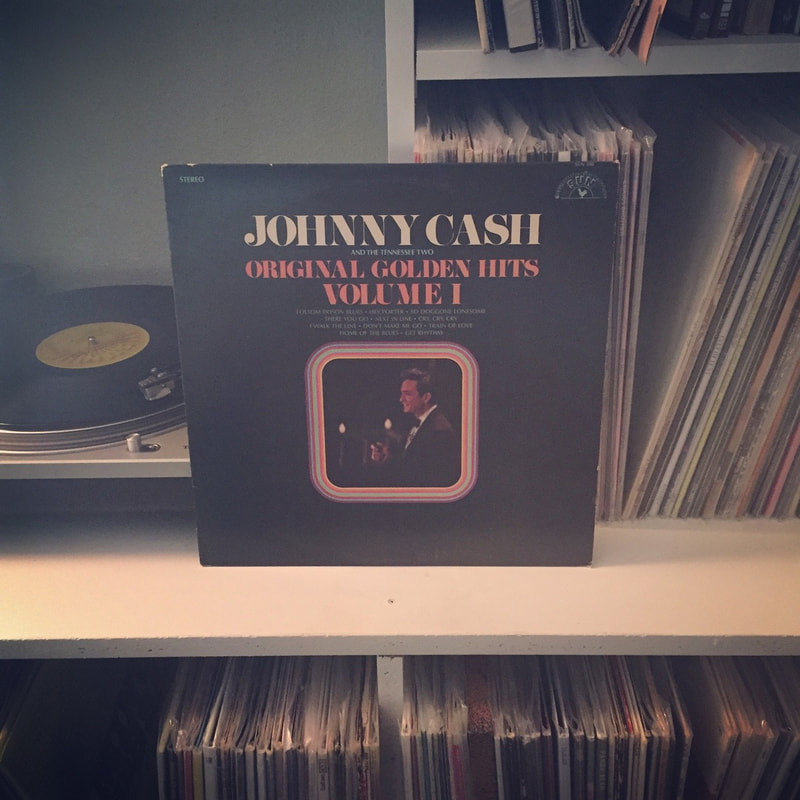
Record #387: Johnny Cash and the Tennessee Two – Original Golden Hits, Volume 1 (1969)

As well as releasing 96 studio albums in his lifetime, Johnny Cash’s record labels (and he had deals with dozens) released hundreds of compilations…
Especially these early tunes. This compilation includes every megahit but Ring of Fire. Folsom Prison Blues, Cry Cry Cry, Get Rhythm, I Walk the Line, and Hey Porter are all accounted for. Which makes sense, because I’m pretty sure every Johnny Cash compilation is legally required to feature at least one of those four tunes.

And for any lesser musician, even the forgotten gems on this disc would be career standouts. But thanks to Cash’s boundless output, even these great tracks got buried under bonafide hits.

Record #386: Johnny Cash – The Sound of Johnny Cash (1962)

It took me two years to get through the first run of Johnny Cash albums in my collection (out of laziness, not quantity). Then, just when I thought I was out, a friend gave me four that he picked up at a garage sale.
​ 
So let’s knock these out.
While Johnny Cash is an undeniably iconic figure in American popular music, part of that is purely thanks to his prolificity. He released ninety-six studio records in his forty-nine-year career. Not every one of those is going to be as memorable as, say, Live at Folsom Prison.

This is his twelfth studio album, and it comes just six years into his career. There are only two songs on here with much notoriety, and even those are famous for other recordings (Delia’s Gone, I’m Free From the Chain Gang Now). 

​Which isn’t to say it’s bad–it’s very difficult for Cash to release a bad song. He has a format, and that format works. He sticks to the script here, and the results are just as devilishly charming as ever. 

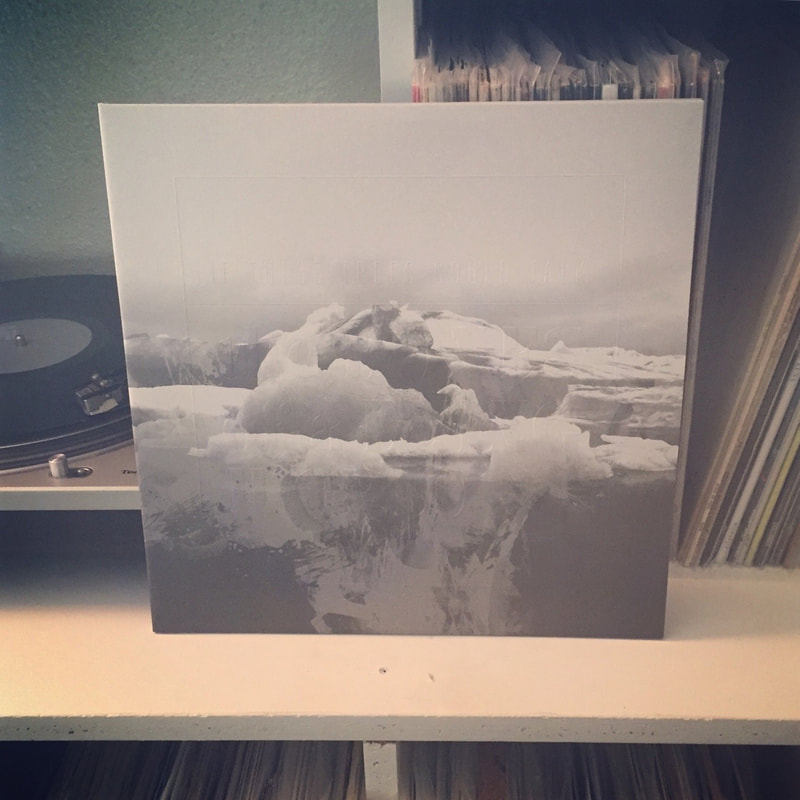
Record #385: If These Trees Could Talk – The Bones of a Dying World (2016)

Every year, no matter how closely I follow the music blogs, there’s always some record I miss until the following year, which inevitably becomes my favorite. In 2010, it was Beach House’s Teen DreamIn 2014 it was La Dispute’s The Rooms of the House. In 2015, it was a tie between Revisionist by Sannhet and Caspian’s Dust and Disquiet.
And last year, it was this.
I never even heard of If These Trees Could Talk until this album showed up in my recommendations on Amazon Prime. And while their algorithm sometimes misses more than it hits, this one was an atomic bomb. Since my first listen, I’ve been desperate to add it to my collection.
The Bones of a Dying World is the exact sort of post metal I yearn for. It’s punishingly heavy, but without ever sacrificing melody. The guitars are soaked in proglike delay and countered with a punishingly heavy rhythm section. It’s an evocative juxtaposition, and creates some incredibly moving moments.
The album opens with “Solstice,” which almost sounds like a metal rewrite of “Sirius” by Alan Parsons Project (note: this is a great thing). The group then creates an album that serves up all the best archetypes of post metal without ever sounding formulaic. There’s plenty of soft-loud dynamic changes, as comes with the territory, but ITTCT adopts the format more thoughtfully than many of their contemporaries, shifting dynamics with purpose rather than out of necessity.

And while most post metal/post rock guitarists rely heavy on the reverb to create atmosphere, these riffs are decidedly more rhythmic. Palm muted delay lines (think more Phoenix than Explosions in the Sky) run through the bulk of the tracks (”Solstice” and “The Giving Tree” most effectively). As a result, there is a groove here that is rare in post metal.

Record #383: Julia Holter – Ekstasis (2012)

I absolutely love 1980s 4AD stuff. So when a record cops that exact aesthetic (right to the cover. See any This Mortal Coil album), there’s a pretty good chance I’m going to like it anyway. But when that record is as immaculately crafted as this, it’s pretty likely to find a spot on my record shelf…
Apparently, Julia Holter has a pretty well-respected catalog outside of this album, but I’ve somehow missed all of it. Her other albums are song cycles built around Ancient Greek literature. While Ekstasis isn’t nearly as heady, there’s a seriousness here that betrays Holter’s derision towards the laziness that so often pervades “bedroom pop.”

There are heavy reverbs and electronic drums all over this disc, but it’d be foolish to compare it to the flood of synth-leaning dream pop bands that have cropped up on Bandcamp over the last several years. This so carefully composed that it might be chamber pop if it were played on acoustic instruments. 

What’s also telling is the flow of the tracks. When I first heard this digitally, I was amazed at how naturally the tracks ran between eachother. So I was aghast when I got the vinyl to see that the track list has been completely redone. But somehow, the record’s cohesive narrative has remained intact.  

Record #382: Joy Division – Closer (1980)

It’s always difficult to divorce an artist’s personal life from their work, but music presents perhaps the biggest challenge. And no album may be so tied to the artist as this one… 
Two months before the release of Closer, Joy Division lead singer Ian Curtis hung himself in his kitchen at the age of twenty-three. He had been struggling with epilepsy and his marriage for years, and confided in his wife that he had no desire to live past his twenties.
Closer was read like a suicide note, a man’s one last baritone yowl into a cruel world that wouldn’t mourn him. He laments betrayal, isolation, mockery, and more, wringing his deep voice into painful contortions. “No wonder he did what he did,” the listeners said. “He was clearly tortured.”
But this isn’t Curtis’s album alone. We would be remiss if we didn’t note the growth of the players behind him since the previous album. Unknown Pleasures might be the more iconic album, but Closer is, by every measure, better written and better played. Bernard Sumner throws himself fully into his noisy riffing on a few songs (especially on “Atrocity Exhibition,” which I don’t think has a single coherent note on the guitar), but he also spends a few tracks completely on the synthesizer. Drummer Stephen Morris and bassist Peter Hook (who famously couldn’t hear Bernard or Ian over himself until he heard the first album) carry this album on their backs with far more surefootedness. They are unmistakably the same band that created the first album, but they cast a shadow that looks an awful lot like New Order, which would form after Ian’s death.
There’s also the dark atmosphere, once more supplied by producer Martin Hannet (which was, again, a sour point with the band). While Unknown Pleasures was written as a punk album and produced as something else, Closer knows exactly what it’s trying to be. It lacks some of the rough edges of the previous album, but with ballads like “The Eternal” and absolute rippers like “Twenty Four Hours,” it’s hard to mourn that change.

In all, Closer is a massively important statement from one of the most important and tragic groups in rock and roll history. It’s telling that New Order’s discography took a very poppy trajectory, because after creating this, they were going to need a whole lot of pop therapy.

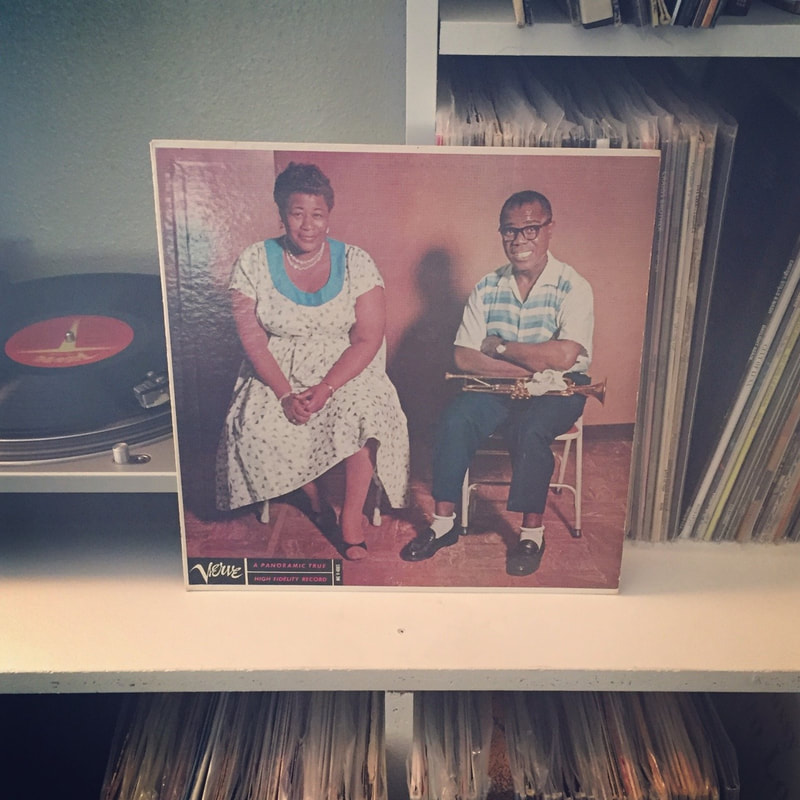
Record #381: Ella Fitzgerald and Louis Armstrong – Ella and Louis (1956)

Name a more iconic duo. I’ll wait…
But seriously, the pairing of Ella Fitzgerald’s velveteen alto with Louis Armstrong’s trumpet/voice hybrid (he somehow manages to sound the same whether he’s playing or singing) is so perfect that it’s amazing that it took so long to happen.

At this point, Miles Davis had already taken jazz from Charlie Parker, who had taken the mantle from Louis Armstrong before him. Satchmo had been doing this for thirty years. Ella for twenty. Both were undisputed icons. This duet series was a massive collision of supergiants.

But you’d never guess at its importance based on the absolute preciousness of the album cover. Nor is its gravity betrayed anywhere in the music. Ella and Louis croon and gravel and play their way through the most popular standards of the day with giddy playfulness. 

And these tunes have endured–Gershwins and Irving Berlin have a fair amount of representation here, so that’s no surprise. There’s also the absolute classic April in Paris, which is correctly remembered as one of this era’s pinnacle tracks. Also included is a charming rendition of They Can’t Take That Away From Me, which is a personal favorite.

But overall, this album is perhaps the most charming thing ever recorded. It certainly doesn’t show either’s technical chops, nor does it have to. It’s merely a perfect example of what these two megastars do better than anyone.